
Joseph Scalia III

Co-Director
Joseph Scalia III, Psya.D. studied Psychoanalysis, Society, and Culture at the Boston Graduate School of Psychoanalysis. He is a practicing psychoanalyst and a social and environmental critic and activist. Dr. Scalia is the author of Intimate Violence: Attacks Upon Psychic Interiority and the editor of the anthology, The Vitality of Objects: Exploring the Work of Christopher Bollas. His most recent book co-authored with Lynne S. Scalia (2026), Critical Consciousness: Beyond Impasses in Environmentalism, Psychoanalysis, and Education. Scalia is a former President of Montana Wilderness Association, and of Gallatin Yellowstone Wilderness Alliance. See scaliapsychoanalysis.com/library for more information on his work, his activism, and his writings. Scalia is an Analyst of IDP.
Lynne Scalia, Ed.D.

Co-Director
Lynne Scalia is a recently retired educator from Montana. Her master’s and doctoral research from Montana State University, in educational leadership, and her work in public schools as a principal and district superintendent is psychoanalytically informed. Her leadership focuses on framing issues and creating structures such that productive dialogue, which critiques and challenges one’s own and the institution’s sacred cows and rigidities, is able to make actionable, practical change, where needed. One of her current projects at IDP is a study group focused on what psychoanalysis today can offer Pre-K through 12 education, in order to assist those who work in the schools.
Scalia has participated in classes at the Ecole freudienne du Quebec, the Northern Rockies Psychoanalytic Institute, and the Colorado Center for Modern Psychoanalytic Studies. She is the author, with Joseph Scalia III of Critical Consciousness: Beyond Impasses in Environmentalism, Psychoanalysis, and Education by Routledge, 2026.
In both education and as co-director of a psychoanalytic institute, Lynne values co-creation, constructive skepticism, critical reflection, and the building of an engaged community where members feel known and valued and where we all, as Winnicott put it, have the capacity for containment and an “absence of the tendency to retaliate under provocation;” simultaneously, we all are charged with a responsibility to speak openly about concerns regarding all aspects of each other’s contributions.
Andrew Bertell

Andrew Bertell is a psychoanalytic psychotherapist based in Ashland, Oregon. Since completing his graduate training at The University of Chicago, he has been actively involved in psychoanalytic training and community with an eclectic array of institutes and educational bodies. He is interested in the variables that influence human development and growth, individually and collectively, in the question of what constitutes a good life, and in partnering with others in contemplation of that question and in the pursuit of meaning and purpose.
Hilda Fernandez-Alvarez, Ph.D.

Hilda Fernandez-Alvarez, PhD, is a Lacanian psychoanalyst based in Vancouver, Canada. She has a vast wealth of clinical experience with diverse populations in public and private settings in Mexico and Canada. She has a master’s degree in clinical psychology from Universidad Nacional Autonoma de Mexico (UNAM), a master’s degree in literature from University of British Columbia (UBC) and a PhD in Geography from Simon Fraser University (SFU). She is the president of Corpo Freudiano Vancouver Lacanian School of Psychoanalysis, just formed last March 2025. She is an associate of the SFU Institute for the Humanities and has conducted clinical seminars since October 2015.
Hilda speaks regularly at various psychoanalytic conferences and colloquies, and has published numerous book chapters and articles internationally, focusing on the theory and practice of psychoanalysis, trauma, discourse, socio-spatial practices, love and politics. She is co-editor of Lamella, a section of the Journal Psychoanalysis, Culture and Society. She is joining IDP to build synergies among communities and learn together.
Todd Dean, MD

Todd Dean, MD is a graduate of the St. Louis Psychoanalytic Institute, where he is a training and supervising analyst, and currently the Dean (sic) of Education. He is a member of the “How to Teach Freud” study group of the Department of Psychoanalytic Education of the American Psychoanalytic Association. He is also a member of the Association of Psychoanalysis and Psychotherapy in Ireland. He has been on the editorial board of the Journal of the American Psychoanalytic Association and Division/Review.
He is invested in developing psychoanalysis as a community service, and teaches Freud and Lacan, as well as Dylan, at the St. Louis Institute. Todd is a Training and Supervising Analyst of IDP.
Rana Sioufi, PhD

Rana Sioufi, PhD, is a supervising psychologist at Rose Hill clinic and in private practice in New York City. Her interests involve the intersections of clinical psychoanalysis with sociopolitical, technological, and ecological dynamics. In the field of social psychology, she has published on inter-group relations, ethnolinguistic vitality, and cultural identity. She holds a Ph.D. in Psychology from the Université du Québec à Montréal. She affiliates with the IDP because she wants to be a part of a psychoanalytic group that embodies a commitment to the common good, now and for future generations on this earth, weaving together the individual and collective cultivation of the democratic spirit in our profession and beyond.
Ali Shames-Dawson, MTS, PhD

Ali Shames-Dawson, MTS, PhD is a clinical psychologist whose work focuses on gender, sexuality, and agency. Her research merges contemporary theorizing in relational psychoanalysis with the study of men and masculinities, examining sexual subjectivity and behavior at the intersection of culture and the individual. Her background includes the study of religion, ethics, and civil rights at Princeton University; critical theory, phenomenology, and psychoanalysis at Harvard Divinity School; and relational psychoanalysis and gender socialization at the New School for Social Research. Her work has been recognized with awards from APA Division 51 Society for the Study of Men and Masculinities and The New School for Social Research. She is currently a supervising psychologist and Director of Education at Therapists of New York. Ali has joined IDP with the conviction that psychoanalysis has liberatory potential on both individual and social levels.
Charles Turk, MD
 Charles Turk became chief resident in psychiatry at the Neuropsychiatric Institute in 1960. He received an Exemplary Psychiatrist award in 2002 from NAMI (National Alliance on Mental Illness) for his work with severely ill patients in a public partial hospitalization program. From the International Federation for Psychoanalytic Education in 2004, in recognition of his educational contributions — specifically, presentations on psychoanalytic work with psychotic patients—Charles was offered a Local Educator award. In 1962, he did his psychoanalytic training at the Center for Psychoanalytic Study and later joined the faculty of the Chicago Center for Psychoanalysis, where he continues to work as a mentor for the next generation. In 2001 he became a founding member of the Chicago Circle of the Ecole Freudienne du Quebec and became an analyst of that School. He joined their Clinical Direction as a representative of the several Circles that now exist in the USA. Charles joined the IDP community in order to foster the development of analysts of the future. He is Emeritus Collaborator of IDP.
David Glickman, NCPsyA, LPCC

I am a psychoanalyst in private practice in Silver City, New Mexico. I studied at the Philadelphia School of Psychoanalysis while practicing at their outpatient therapy clinic, the Philadelphia Consultation Center. The school and the clinic were both heavily influenced by the work of Hyman Spotnitz, particularly his book Modern Psychoanalysis of the Schizophrenic Patient: Theory of the Technique.
At the start of 2024, I started writing songs loosely inspired by my psychoanalytic experiences (and also informed, to a lesser extent, by over 27 years sober in recovery). Concurrently, I also picked up a guitar for the first time in my life, and began learning to play from scratch. I’ve been writing songs and playing guitar ever since, which feels like much longer than the past two years (at the time of this writing). And just exactly how is this personal side-project and creative jouissance relevant to my fledgling affiliation with IDP? Good question.
I am currently taking a class at IDP, The End and Aims of Psychoanalysis. In class readings, I was introduced to an article by Jeffrey Librett, “The Subject in the Age of World-Formation (Mondialisation).” In this article, there is a section subtitled (Un)worldliness and the Aesthetic Dimension, in which I discovered a passage that speaks powerfully to a place of contradiction that I currently find myself inhabiting – personally and professionally, artistically and as a psychoanalyst.
It reads as follows:
The singular – the unsayable, or what cannot directly be shared, is what we share. That is, we share that we cannot share what we have to say, each one’s singular experience of (and as) something nonrepresentable. Such an experience emphasizes the dissonance of harmony or dissonance against the background of harmony.
The opening line from a recent song of mine goes like this: “always say it wrong to you, no matter how I try…” I’m happy to report that as of today, I’m still saying it wrong and I’m still trying – to create something like Librett’s “dissonance of harmony or dissonance against the background of harmony.” Somehow, IDP strikes me as fertile ground for this impossible neverending exploration.
cathie bird

cocreative soul-freeing-art image – embodying presence / cathie, 28 May 2025
I started reading Freud and Jung in high school. In 1988, I entered personal analysis; a year later, I began parallel tracks of study in Contemplative Psychotherapy at Naropa University (Boulder, CO; MA in psychology, 1991) and Modern Psychoanalysis at CCMPS (Boulder and Albuquerque; PsyP certification, 2004). I worked in community mental health clinics in New Mexico for 7 years before entering private practice as an LPCC. I moved to rural eastern Tennessee in 2000, and continue a limited practice (LPC/MHSP) there via phone and Zoom. Several years ago, finding identification as a ‘psychoanalytic practitioner’ to be too limiting, I reimagined my professional engagement as more within universal energy field language of Soul Healing and Soul Witnessing. My deepest interest in the work of IDP relates to edges or spaces in which our individual and collective Human relationships to one another, to Planet Gaia, and to Life and Consciousness beyond material Earth densities can be explored and understood as interbeing.
Alexander O. Dolabi
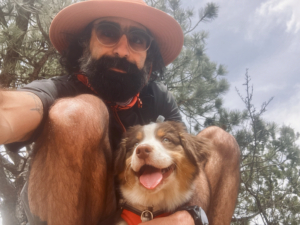
Alex Dolabi is a Candidate Scholar Analyst and a Project and Sites Developer with the Institute for a Democratic Psychoanalysis. He joined the IDP as a continuation of his quest to better hear, understand, and support human beings in their collective struggle against the forces of disemancipation, repression, structural violence, racecraft, genocide and ecocide. Regarding both life and thought as aspects of existence that go beyond bodies, Alex is drawn to psychoanalysis as one way among others to become attuned and attentive to emerging forms of subjectivity, embodiment, and civilization without disregarding history, ethics, and the unconscious. He is an inheritor of the tradition and invention passed down to us from Socrates, Diogenes, Spinoza, Freud, Ferenzci, Fanon, Freire, Winnicott, Milner, Lacan, Dolto, and many but not enough contemporaries.
Alex studied Geology, Critical Theory, and Religion at Macalester College and Philosophy and Psychoanalysis at Duquesne University and is happily indebted to many friends, professors, teachers, coaches, mentors, and random folks as well! He was a farmhand at Honey Field Farm in Norwich, Vermont, before working as a care coordinator for individuals in crises of health, homelessness, and existential instability in New York City. He later moved into education, working in K–12 public schools and with incarcerated adolescents. Alongside creative, spirited, and kind people at the IDP, Alex continues to learn how to transform the world and interpret it when necessary, with a special concern for the young and the disenchanted, the immigrant and the vagrant, and those driven into either compliance or madness by conditions not of their own choosing. He lives in Fort Collins, Colorado, with an Australian Shepherd named Rocidante.
Braden Vernon, PhD
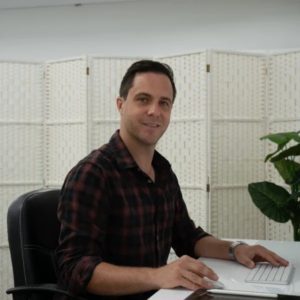
Braden Vernon is a New Zealand-born, Australian-based psychotherapist working with general mental health and forensic populations, both within New South Wales correctional centres and private practice. His work draws from a range of psychoanalytic and broader therapeutic approaches, with a current focus on contemporary object relations theory and transference-focused psychotherapy. Dr Vernon’s research explores the use of both psychoanalytic assessment methods (STIPO-R) and non-analytic instruments in populations with atypical sexual interests, with the aim of contributing to a deeper understanding of personality functioning and informing sexual abuse prevention initiatives. Braden is completing his candidacy in psychoanalytic psychotherapy and psychoanalysis through the New Zealand Institute of Psychoanalytic Psychotherapy and the Institute for a Democratic Psychoanalysis. He joined IDP out of a wish to participate in an intellectually open and collaborative analytic community that values dialogue across psychoanalytic schools of thought over dogmatism and rigid bureaucracy.